
Kensington Court Docket Searches
The city's official pages give you no citation field and no party-name search. You get no case results and no municipal calendar either. Start instead with the Kensington City Office contact page. Call 785-476-2668 during the published office window, with the original notice in hand. Ask plainly whether the matter sits on a Kensington municipal docket. Ask which official keeps it. A little preparation makes that call count.
- Read the issuing authority, citation number, ordinance, and appearance line.
- Call the City Office and ask who keeps the Kensington municipal record.
- Confirm the date, time, court location, and payment or contest route.
- Ask how to inspect or obtain the exact docket entry or disposition.
- Use Kansas CaseSearch only if staff or the notice identifies a Smith County district case.
A statewide portal that does not index municipal cases will not return a Kensington match, so expect a blank. Treat that blank as a routing clue rather than a conclusion about the case.
Kensington Ordinances Are Not Dockets
The city's ordinance archive holds traffic and public-offense material. It includes Standard Traffic Ordinance No. 442 and earlier enactments. These documents name the city rule behind a citation. What they cannot tell you is whether a case exists. They cannot say whether anyone appeared or how it ended. The archive covers the ordinance side of Kensington's record system, straight from the city itself.
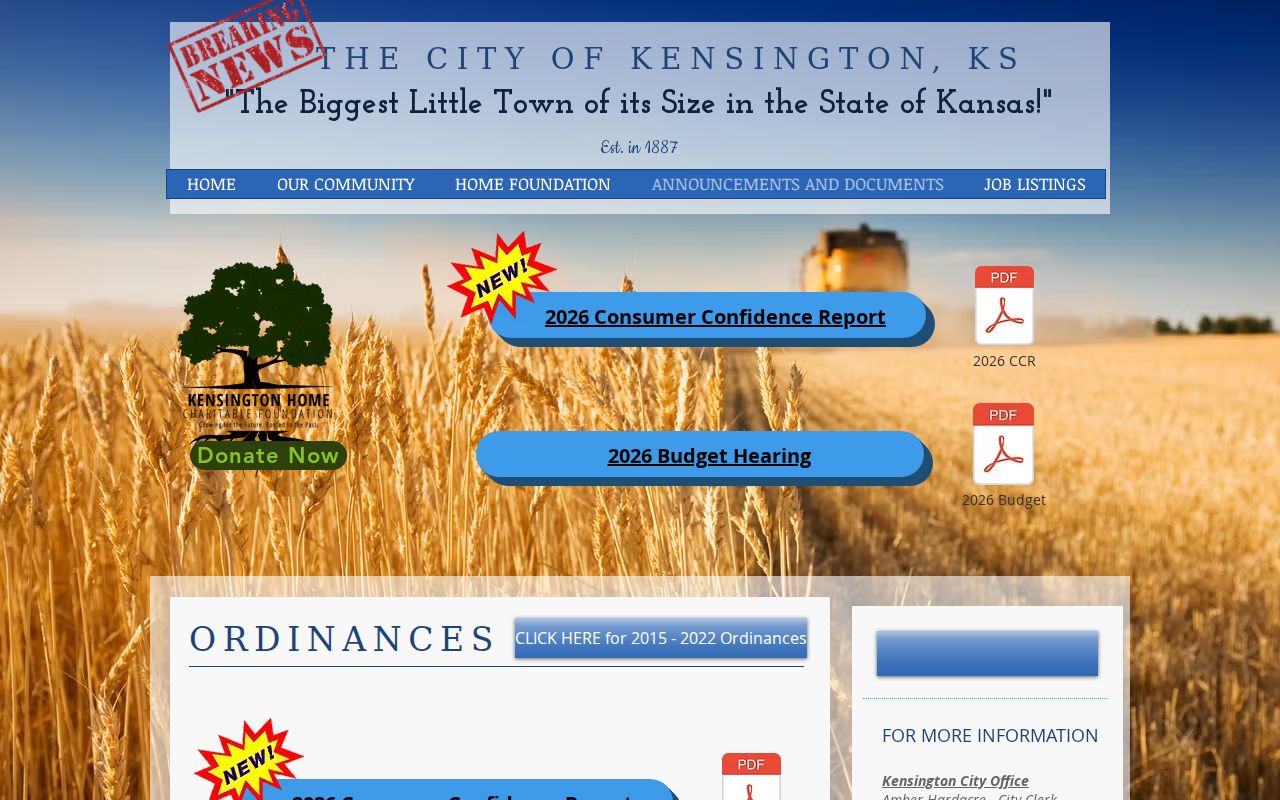
That is the split in practice: the code is public, while docket-search controls are absent. Pair the ordinance number with the citation and its date when requesting a case record.
Inside the Kensington Municipal Court
Kansas law gives municipal courts authority over city ordinance violations. The official K.S.A. 12-4104 page sets out that jurisdictional base in the statute itself. The current Kensington site, though, names no judge. It posts no session schedule, lists no court-specific email, and publishes no fine list. The statute is routing evidence. The city site supplies the gaps you must fill by phone.
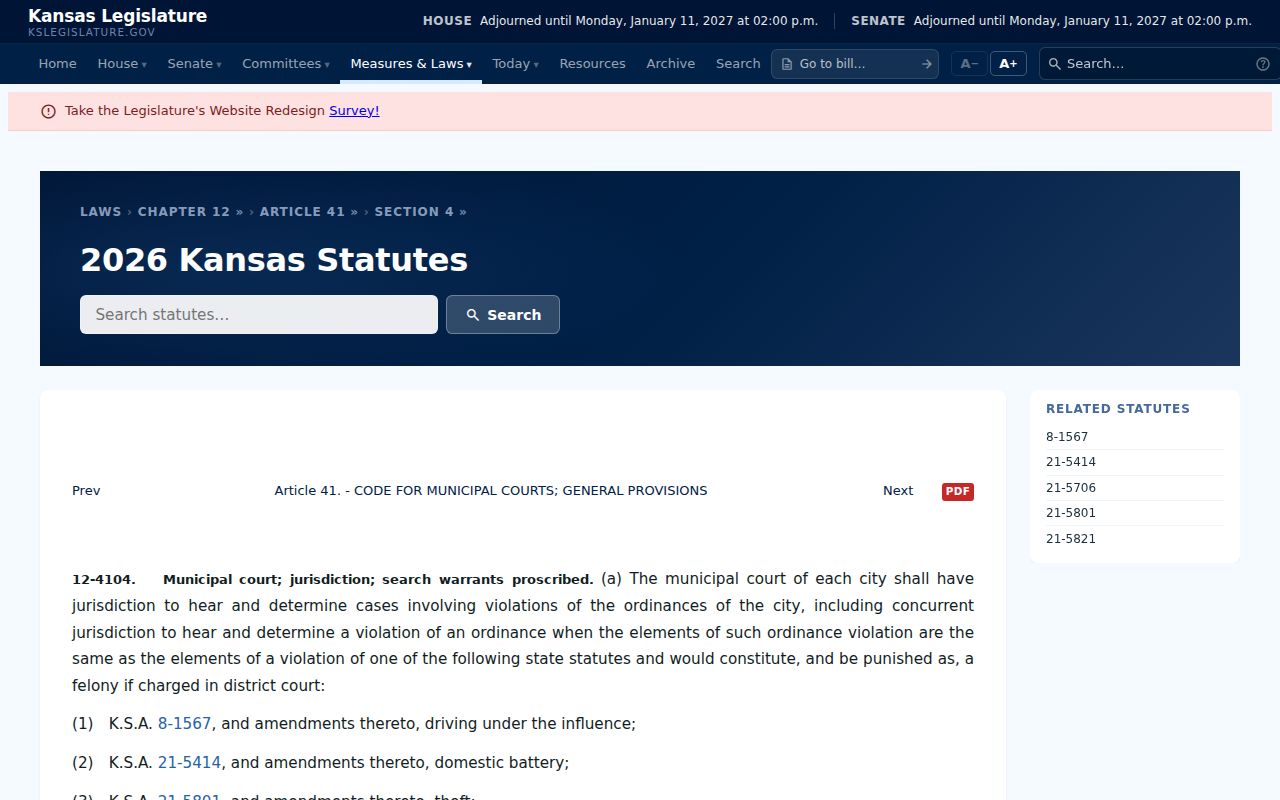
The statute proves no ticket exists. It only explains why a Kensington ordinance matter follows the municipal route instead of the district portal. Confirm with the clerk before assigning any case to a court.
Kensington Half-Day Office Window
Kensington City Office sits at 101 S. Main, P.O. Box 186, Kensington, KS 66951. Published weekday hours run 8:00 a.m. to noon. The listed contacts are phone 785-476-2668, fax 785-476-2663, and email ktown@ruraltel.net. Amber Hardacre appears as City Clerk.
Kensington City Office
101 S. Main, P.O. Box 186
Kensington, KS 66951
785-476-2668
Monday through Friday, 8:00 a.m. to noon
Call before you drive over. A half-day window limits when a record can be reviewed or a court question routed, and the site names no separate municipal court counter.
Finding Kensington Court Dates
The current city site publishes no Kensington court calendar. Your first source for an appearance date is the citation or a later notice. City staff can confirm whether that date belongs to a municipal session, where the session takes place, and whether a different official handles scheduling.
| Date | The appearance date printed on the citation or confirmed by the custodian. |
|---|---|
| Time | The stated start or individual setting time, if one is assigned. |
| Location | The place identified on the current notice or by city staff. |
| Case ID | The citation or municipal number, if printed. |
| Setting Type | The exact label used by the court, without guessing. |
A council meeting is not a court session. Kensington says its council meets the second Monday at 5:00 p.m. in the City Office. That civic calendar is no judicial schedule.
Kensington Contact Page as Fallback
The contact page works as a fallback because it names the office, the clerk, the phone, the fax, the email, and the hours. It is not a case database. That official page is exactly the kind of administrative detail a Kensington record searcher can pull from it.
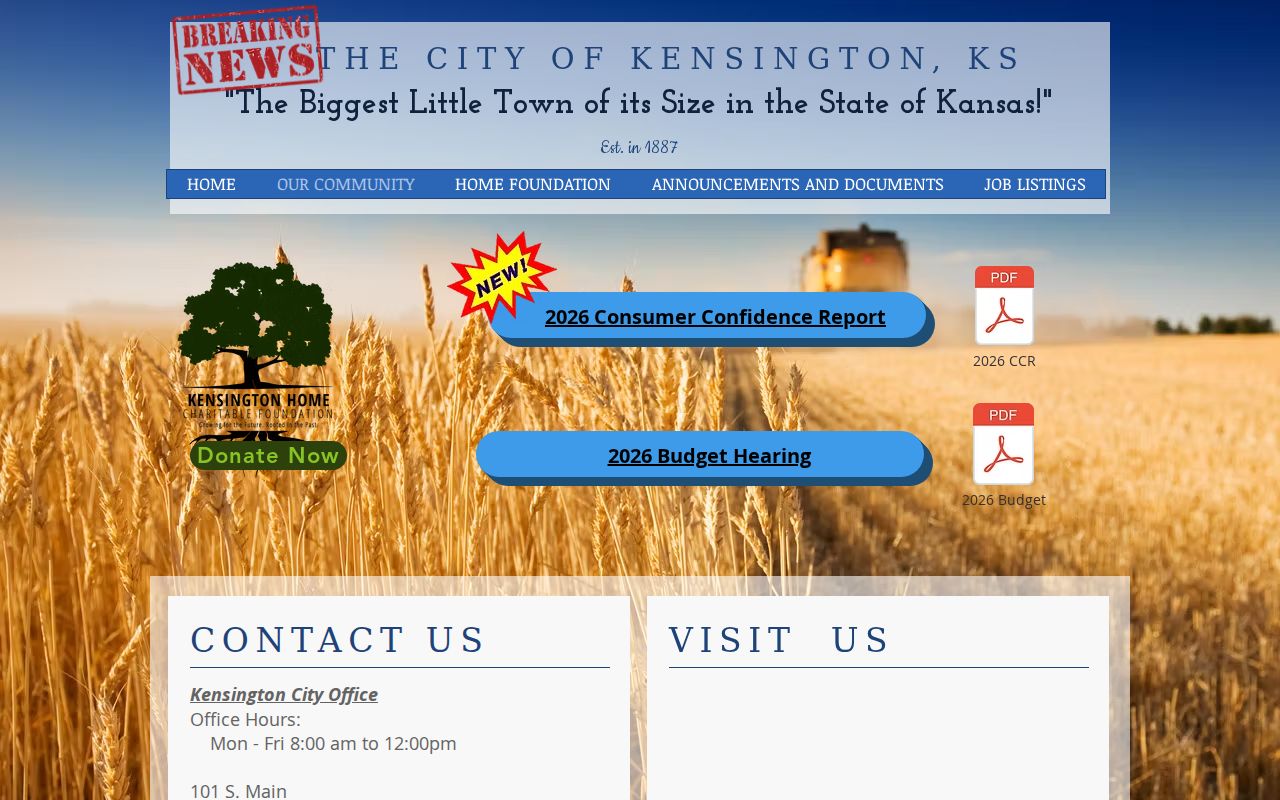
Use those contacts to ask who holds the docket. Give the citation number, the issuing body, the ordinance section, the date, and the precise item you want. If the clerk points to another court administrator, follow that referral and keep a copy with your request. Note: the published city email is a way to reach staff, not a green light to send confidential details before asking what information is actually needed.
Kensington Traffic Ticket Lookups
A ticket charging a Kensington ordinance goes to the city route first. The ordinance archive can decode the section. But the city offers no payment screen and no citation lookup. Call the City Office to learn whether payment is allowed. Ask where a plea is entered, and whether you must appear. A state-law citation filed in Smith County District Court follows a different path. Kansas CaseSearch covers eligible district cases by citation or case number. The Kansas Central Payment Center may handle payment for an eligible state matter. Neither one is Kensington's municipal portal. The word "traffic" alone tells you nothing about jurisdiction. Read the issuing authority. The Smith County traffic court record overview gives the fuller district-versus-municipal comparison.
Kensington City and Court Calendars
The city's home and announcement pages carry civic information, not court settings. Council dates, notices, and community news can appear there while no hearing is ever listed. A polished calendar or feed is not a Kensington docket unless the city itself calls it the court schedule. The official Kensington home page shows the public city site as the city presents it.
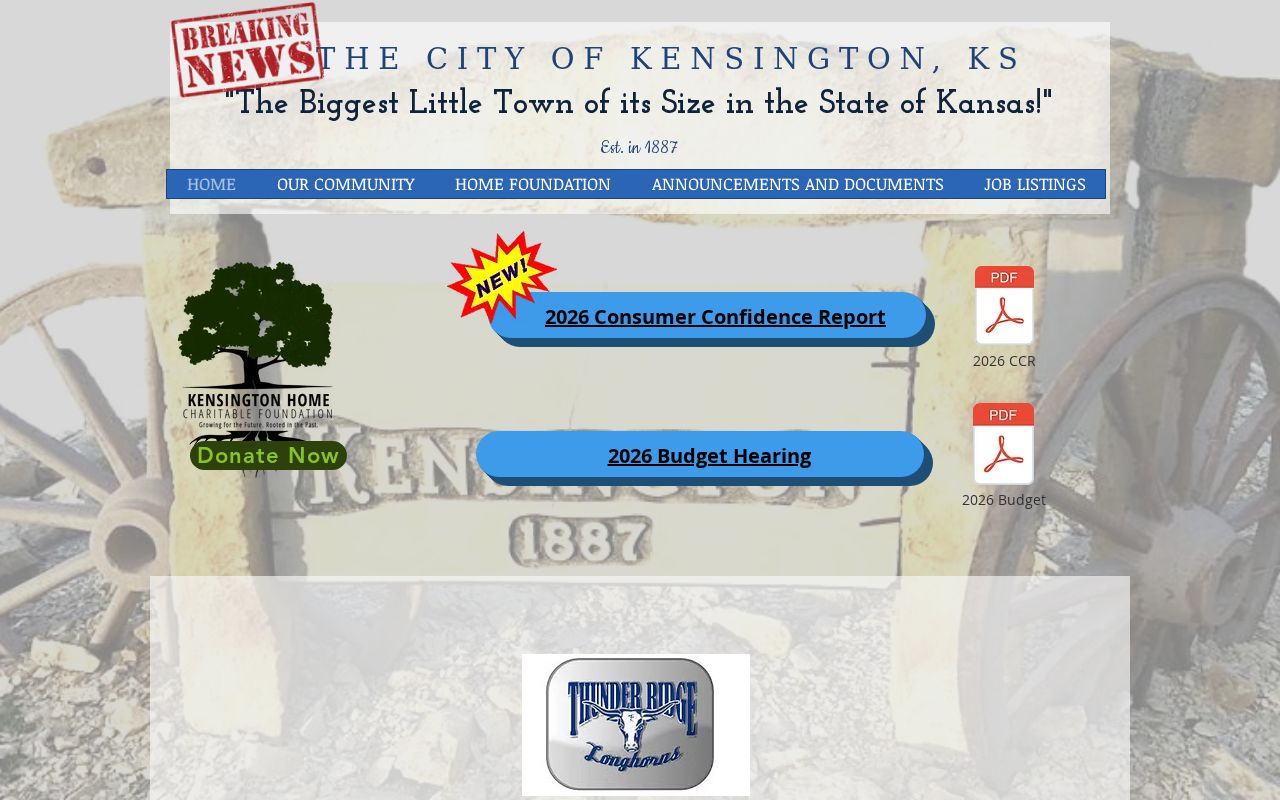
Begin with the clerk, not with an assumed search box. Confirm any judicial date from the citation or from the official charged with the municipal record.
How Kensington Cases Reach County
Most Kensington ordinance cases stay at the municipal level. They move up only when the law sends them there. One route is an appeal: under K.S.A. 22-3609, a municipal judgment can be appealed into Smith County District Court. A charge filed under state law can start in district court from the outset. The courthouse docket, not the city file, holds that record.
Docket flow: Kensington Municipal Court › Smith County courts › District Court
An appeal creates a district file, yet it leaves the original Kensington case sitting in city hands. Neither docket replaces the other. A thorough case lookup may require calling both offices, since the city record and the district appeal are held separately.
Kensington’s 399-Person Context
Kensington counted 399 residents in the 2020 Census incorporated-place table. That figure makes it second in size among the five Smith County cities profiled here. Population hints at resources but reveals nothing about online court tools; small and large towns alike vary on that front.
The city posts an ordinance archive and lists detailed office contact information, but it runs no live docket. So call first. That plain route beats guessing at a portal that does not exist.
Kensington Court Record Requests
Keep the request narrow so staff can actually find the file. A workable formula: ask for "the City of Kensington municipal-court docket entry or disposition associated with" a citation number, a date, and an ordinance, if the city keeps it as a public record. Say plainly whether you want to inspect the record or receive a copy.
| Question | Detail to provide | Reason |
|---|---|---|
| Which court? | Issuing authority and notice heading | Separates city from district jurisdiction |
| Which record? | Citation, date, ordinance, record name | Narrows the clerk’s search |
| How delivered? | Inspection, mail, fax, or email request | Lets staff quote a lawful option |
Before anything is copied, ask about the estimated charge and how certification works. Kensington publishes no copy or certification fee, so do not assume Smith County rates apply here.
Kensington Search Mistakes to Avoid
Three documents get mistaken for each other. An ordinance PDF states a rule, a council calendar lists a civic meeting, and Kansas CaseSearch reports eligible district records. None of them is automatically a Kensington municipal docket.
- Do not use the council’s second-Monday meeting as a court date.
- Do not treat Ordinance No. 442 as a list of traffic cases.
- Do not assume a blank district search means no city citation exists.
- Do not invent a judge, session day, payment link, or copy fee.
- Do preserve any official referral to another municipal custodian.
These checks keep the search honest and make a clerk call more precise.
Who Can See Kensington Court Records
Kansas open-records law sets the general framework for city records. Kensington itself must name the custodian and apply any exemption, and if part of a record is closed, you can ask that nonexempt portions be separated and released. District electronic records operate under their own court rule.
Key rules:
K.S.A. 45-218 addresses inspection and the public-agency response.
K.S.A. 45-220 allows procedures and a focused written request.
Kansas Supreme Court Rule 22 governs public electronic district-court access.
A courthouse terminal will not unseal a sealed record, and CaseSearch cannot answer for Kensington's municipal custodian. Use the route that matches the actual court on the case.
Kensington Clerk Search Notes
For an older matter, give the clerk an approximate year and the citation details. Name the exact record type you want. Ask whether the file still sits in city custody or has moved to an archive. The public website posts no retention schedule. Only the official custodian can confirm where the record lives and how a copy is made.
A former citation number, ordinance section, party name, and rough disposition date will narrow any docket search. It helps to ask staff to check an index first and quote the copy cost before the work begins. If no municipal record remains, ask where it went. Get the name of the agency or archive that received it. Save that official reply with your notes. It explains why a later Kensington request might follow a different route.
Kensington Citation Call Checklist
Build the call around the notice itself, not a broad name search. Read off the court heading, issuing agency, and citation number. Then give the alleged ordinance, incident date, appearance date, and any payment language. Ask the clerk to repeat the court name and say who holds the original docket. If the number does not match city records, check each character first. Only then try another office.
Next, keep scheduling apart from records. For a hearing date, ask whether a later notice or reset exists. Ask where the appearance will be held. For a copy, name the item: the docket entry, disposition, judgment, or receipt. Then ask whether inspection is possible during the half-day office window. Can a copy be mailed or faxed? What charge must be paid first? The official pages leave those questions open. A current clerk response is the sound source.
Staff may say the case was appealed or filed under state law. Ask for the Smith County district case number. Run that number through CaseSearch rather than another loose party search. Keep the referral and the date of the call. That small record explains why the municipal and district searches may return different events.